You Won’t Believe What These Walls Have Seen – Udaipur’s Palaces Speak
Nestled in the heart of Rajasthan, Udaipur isn’t just a city—it’s a living storybook. Its iconic landmarks aren’t merely stone and marble; they’re silent witnesses to royal legacies, secret courtyards, and breathtaking craftsmanship. If you're searching for destinations where architecture meets soul, this is it. I walked through arched gateways that opened into sun-drenched plazas, stood beneath domes painted like twilight skies, and felt history whisper through every corridor. The air carries echoes of poets, warriors, and queens who once shaped this land. Every palace wall tells a story—not of conquest, but of culture, continuity, and quiet dignity. Welcome to the soul of Rajasthan.
The Crown Jewel: City Palace – Where History Lives in Stone
Standing proudly along the eastern banks of Lake Pichola, the City Palace of Udaipur is more than an architectural marvel—it is the beating heart of the city’s royal past. Spanning over 400 years of construction, initiated by Maharana Udai Singh II in 1559, this sprawling complex rises in layered grandeur, a fusion of Rajasthani fortification and Mughal elegance. Its cream-colored walls, carved balconies, and domed chhatris (pavilions) form a skyline that defines Udaipur’s identity. The palace was not built in one era but expanded by successive rulers, each adding courtyards, chambers, and decorative flourishes that reflect their time, taste, and vision.
Visitors entering through the grand Tripolia Pol—a triple-arched gate reserved originally for royalty—step into a world where every courtyard has a purpose and every hall a memory. The Mor Chowk (Peacock Courtyard), inlaid with vibrant mosaics of glass and mirror, depicts the sacred bird in full plumage, symbolizing grace and protection. Nearby, the Sheesh Mahal (Mirror Palace) dazzles with its intricate mirror work, where candlelight once created a shimmering galaxy across the walls and ceiling. These spaces were not just for beauty; they were designed to inspire awe and reflect divine kingship.
The palace houses several museums showcasing royal costumes, weaponry, manuscripts, and miniature paintings that chronicle the lineage of the Mewar dynasty—one of the oldest ruling families in India. The Mardana Mahal (men’s quarters) and Zenana Mahal (women’s quarters) offer insights into the social structure of the court, revealing how privacy and protocol shaped daily life. One of the most moving exhibits is the portrait gallery, where generations of rulers gaze down with solemn pride, their expressions hinting at both burden and devotion to duty.
For travelers, visiting the City Palace is not just sightseeing—it’s time travel. To make the most of the experience, arriving early in the morning, ideally between 9 and 10 a.m., helps avoid midday heat and tourist crowds. Guided tours, led by certified local historians, add depth by explaining symbolism in carvings, the significance of color schemes, and little-known anecdotes about royal rituals. Photography is permitted in most areas, though flash is restricted in museum zones to protect delicate artifacts. The rooftop terraces, especially near the Panchchowki complex, offer some of the best panoramic views of Lake Pichola and the distant hills—perfect for quiet reflection or capturing the golden glow of late afternoon light.
Floating Elegance: The Magic of Lake Palace (Jag Niwas)
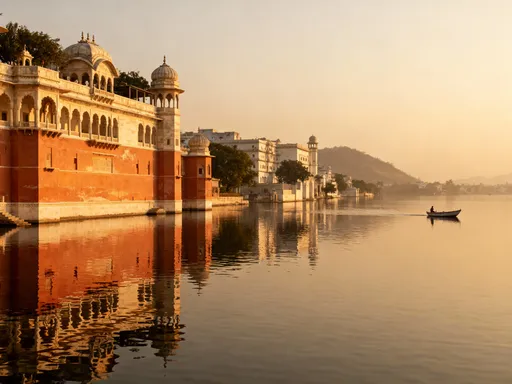
Emerging from the still waters of Lake Pichola like a dream carved in white marble, the Lake Palace—originally known as Jag Niwas—commands attention with its ethereal presence. Built between 1743 and 1746 by Maharana Jagat Singh II, this exquisite island palace was designed as a summer retreat and monsoon pavilion, offering cool breezes and unmatched serenity. Surrounded by water on all sides, it appears to float, especially at sunrise when mist curls around its domes and minarets, creating a vision of otherworldly calm.
The palace’s architecture blends Rajput symmetry with Islamic detailing, evident in its arched colonnades, delicate jali (lattice) screens, and domed chhatris that rise like pearls from the lake. The use of pure white marble was both aesthetic and practical—its reflective quality helped lower indoor temperatures, a clever adaptation to Rajasthan’s intense summers. Inside, the palace was once adorned with frescoes, mirrored walls, and fountains, blending comfort with regal splendor. Though access to the interior is now limited to guests of the luxury hotel operated by Taj Hotels, the exterior remains one of Udaipur’s most photographed landmarks.
For non-residents, the best way to experience the Lake Palace is by taking a boat ride from the City Palace ghats. Public ferries and private shikaras (traditional wooden boats) depart regularly, offering close-up views of the palace’s intricate façade and the opportunity to circle the entire island. Sunset cruises are particularly popular, as the setting sun bathes the marble in golden and rose hues, transforming the palace into a glowing jewel on the water. The experience is serene, almost meditative, as the sounds of the city fade and the ripples of the boat echo against the palace walls.
Photographers and romantics alike find magic in this floating sanctuary, but even those who simply appreciate beauty in stillness will be moved. The Lake Palace stands not as a monument to power, but to peace—a retreat from the world, built for contemplation and connection with nature. Its transformation from royal hideaway to luxury heritage hotel has ensured its preservation, allowing modern travelers to glimpse, even from a distance, the refined tastes of Rajasthan’s royal past.
Island Serenity: Jag Mandir – The Hidden Retreat
While the Lake Palace draws the crowds, its neighbor—Jag Mandir Island Palace—offers a quieter, more intimate experience. Located on an island between the mainland and Jag Niwas, Jag Mandir has served many roles throughout history: a pleasure garden, a diplomatic meeting point, and even a temporary refuge. During the 17th century, Prince Khurram—later Emperor Shah Jahan—was granted shelter here during a period of political exile, a testament to the Mewar rulers’ reputation for honor and hospitality.
Unlike the exclusively private Lake Palace, Jag Mandir welcomes visitors and invites leisurely exploration. The palace complex features elegant courtyards, marble terraces, and lush gardens filled with frangipani and hibiscus. At its center stands the Gul Mahal, a small but graceful structure originally built for royal women to enjoy lake views in privacy. Adjacent is the Darikhana, a dining pavilion where guests can now enjoy light refreshments while taking in the breeze and panoramic sights of Udaipur’s skyline.
Walking through Jag Mandir feels like stepping into a forgotten chapter of history. Stone pathways wind past fountains and shaded alcoves, offering spots for rest and reflection. The acoustics are remarkable—voices carry softly over water, and birdsong blends with the lap of waves. Cultural events, including classical music performances and poetry readings, are occasionally held here, reviving the tradition of art and leisure that once flourished in such spaces.
Access to Jag Mandir is straightforward: a short ferry ride from the City Palace waterfront, with departures every 30 to 60 minutes depending on the season. Entry fees are modest, making it an affordable complement to a full day of sightseeing. For a truly memorable experience, consider timing your visit to coincide with an evening return, when the city lights begin to twinkle and the palace is softly illuminated. A lakeside dinner at one of the cafés near the boat dock—serving Rajasthani thalis or light snacks—adds a comforting end to the journey, grounding the day’s elegance in local flavor.
Hilltop Grandeur: Sajjangarh (Monsoon Palace) at Dusk
Rising over 900 feet above Udaipur on the Bansdara Hills, the Sajjangarh Palace—commonly known as the Monsoon Palace—offers a completely different perspective, both literally and emotionally. Built in the late 19th century by Maharana Sajjan Singh, it was intended as an astronomical center and monsoon-watching retreat, a place where the royal family could observe cloud formations and enjoy cool evening breezes. Though never fully completed, the palace has become one of Udaipur’s most cherished vantage points, especially at sunset.
The drive up the winding road to Sajjangarh passes through the Sajjangarh Wildlife Sanctuary, home to leopards, wild boars, and over 100 species of birds. This natural setting enhances the sense of escape—visitors leave behind the bustle of the city and enter a realm of quiet beauty. The palace itself is built in sandstone with minimal ornamentation, emphasizing function and harmony with the landscape. Its long colonnades and open terraces face west, perfectly aligned to capture the daily spectacle of the sun sinking behind the Aravalli hills.
Arriving an hour before sunset is ideal. As daylight fades, the sky transforms into a canvas of amber, violet, and deep orange, while below, the lakes of Udaipur begin to glow like liquid silver. The city lights emerge one by one, creating a constellation on earth that mirrors the stars soon to appear above. This moment—when day surrenders to night—is when Sajjangarh feels most alive, a silent witness to nature’s grandeur.
Photography enthusiasts will find endless opportunities, from wide-angle cityscapes to intimate shots of the palace’s weathered arches framed against the sky. However, visitors should plan their return carefully, as the road becomes dark and minimally lit. Traveling in groups or hiring a return vehicle in advance is advisable, especially for families. The surrounding sanctuary is generally safe, but rangers recommend staying on marked paths and avoiding late-night visits. Despite these small precautions, the experience of Sajjangarh remains one of Udaipur’s most peaceful and profound.
Beyond the Palaces: Architectural Gems in the Old City
While the lakeside palaces dominate postcards, Udaipur’s old city holds quieter, equally enchanting treasures. Wandering its narrow lanes reveals a different kind of beauty—one rooted in daily life, craftsmanship, and community. Sahelion-Ki-Bari, or the “Garden of the Maidens,” is one such gem. Built in the early 18th century for royal ladies forbidden from public spaces, this garden features marble fountains, kiosks, and lotus pools shaded by stone elephants. Today, it’s a peaceful retreat for families and a favorite spot for morning walks.
Along the ghats of Lake Pichola, Gangaur Ghat stands out for its row of intricately carved temples dedicated to Shiva and other deities. These small shrines, with their detailed stone work and colorful flags, come alive during festivals like Gangaur, when women gather to offer prayers for marital harmony and well-being. Even outside festival season, the ghat offers a glimpse into devotional life, where rituals unfold quietly against the backdrop of water and palace views.
The havelis (traditional mansions) of Udaipur, though less visited, are masterpieces of Rajput domestic architecture. Many feature jharokhas—overhanging enclosed balconies with carved stone screens—that provided ventilation and privacy for women. Some have been converted into boutique guesthouses or art galleries, preserving their heritage while serving modern needs. A walking tour connecting these sites—starting at Gangaur Ghat, passing through the bazaar lanes, and ending at Sahelion-Ki-Bari—allows visitors to experience Udaipur at a slower, more personal pace. Along the way, interactions with local artisans, tea vendors, and flower sellers add warmth and authenticity to the journey.
How to Experience Udaipur’s Landmarks Like a Pro
To truly appreciate Udaipur’s architectural legacy, thoughtful planning is essential. A well-paced itinerary of two to three days allows time to explore the major palaces without rushing. Begin with the City Palace on day one, allocating at least three hours for a thorough visit. Follow it with a boat ride to the Lake Palace and Jag Mandir, ideally in the late afternoon when light is soft and crowds thinner.
Day two should focus on Sajjangarh and the old city. Start early with a walk through the bazaars and visit to Sahelion-Ki-Bari, then head to Gangaur Ghat for a quiet moment by the water. After lunch, drive up to Sajjangarh in time for sunset. On day three, revisit favorite spots or explore lesser-known havelis and craft workshops, where handmade miniature paintings, silver jewelry, and block-printed textiles can be admired and purchased ethically.
For deeper understanding, hiring a certified guide is highly recommended. These professionals, often trained in history or heritage conservation, provide context that enriches every detail—from the meaning of a carved lotus to the engineering behind a stepwell. Early mornings are ideal for photography, as the golden light enhances textures and colors without harsh shadows. Dress modestly when visiting temples or royal quarters—shoulders and knees covered—and carry water, sunscreen, and a light scarf for sun protection.
Transportation within the old city is best done on foot or by cycle rickshaw, an eco-friendly option that supports local livelihoods. These colorful, hand-pedaled vehicles navigate narrow lanes with ease and offer a charming way to travel between sites. Avoid unlicensed taxis and insist on metered or pre-agreed fares to prevent misunderstandings. Weather-wise, the best time to visit Udaipur is between October and March, when temperatures are mild and skies clear. Summer months can be extremely hot, so plan indoor visits—like museum tours—during peak afternoon hours.
Why These Monuments Matter – More Than Just Beauty
The palaces and architectural wonders of Udaipur are not relics of a forgotten time—they are living testaments to resilience, artistry, and cultural continuity. Each structure embodies centuries of knowledge, from hydraulic engineering that sustained lakes and gardens to craftsmanship that turned stone into poetry. They remind us that beauty, when rooted in purpose and tradition, can endure far beyond the lifetimes of those who built it.
Preserving these sites is not just the duty of governments or historians—it is a shared responsibility. Responsible tourism plays a crucial role. By respecting rules, supporting local guides, and avoiding vandalism or littering, visitors become stewards of heritage. Purchasing crafts directly from artisans, rather than mass-produced souvenirs, helps sustain traditional skills that might otherwise fade.
For women travelers, especially those between 30 and 55, Udaipur offers more than scenic beauty—it offers connection. It’s a place where history feels personal, where quiet courtyards invite reflection, and where the strength of past queens and mothers echoes in carved inscriptions and garden pathways. These monuments speak of endurance, dignity, and the quiet power of culture to unite generations.
As you walk through Udaipur’s palaces, let yourself listen—not just with your ears, but with your heart. The walls may not speak in words, but they tell stories of love for land, devotion to duty, and an unwavering belief in beauty as a form of truth. To visit Udaipur is not merely to see a city—it is to feel the pulse of a legacy that continues to inspire. So come with curiosity. Come with respect. And let the palaces whisper their secrets to you, one stone at a time.