Wander Slow, Shop Deep: My Soulful Stroll Through Jeju’s Hidden Markets
There’s something magical about wandering without a map, letting the breeze guide you through quiet alleys and local stalls. In Jeju, I discovered that slow travel isn’t just about pace—it’s about presence. Stripping away the rush revealed a side of shopping I never expected: intimate, authentic, and deeply connected to island life. This is not retail therapy—it’s cultural immersion, one handmade bowl at a time. As a woman in my forties who once measured vacations by how many sights I could check off, this shift was unexpected. But here, where volcanic stone walls stand like silent guardians and the sea breathes in steady rhythm, I learned to listen. And in listening, I found a deeper kind of journey—one where every purchase tells a story, and every encounter feels like a quiet gift.
The Rhythm of Slow Travel in Jeju
Slow travel is not merely a trend; it is a reclamation of time, a deliberate choice to move through a place with intention rather than itinerary. In Jeju, this philosophy finds its natural home. The island’s landscape—softened by mist, shaped by ancient lava flows, and cradled by the sea—invites a slower pace. Hills roll gently into the horizon, pine trees lean with the wind, and even the traffic seems to pause at crosswalks as if respecting the island’s unhurried spirit. For travelers accustomed to ticking off attractions, this can feel disorienting at first. But within days, the body adjusts. The breath deepens. The eyes begin to notice what was once overlooked: the curve of a handmade tile, the glint of sunlight on a fish market’s wet stone floor, the way an elderly vendor folds paper around a bundle of dried persimmons with ceremonial care.
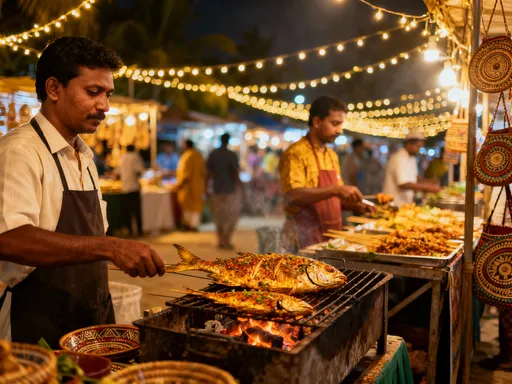
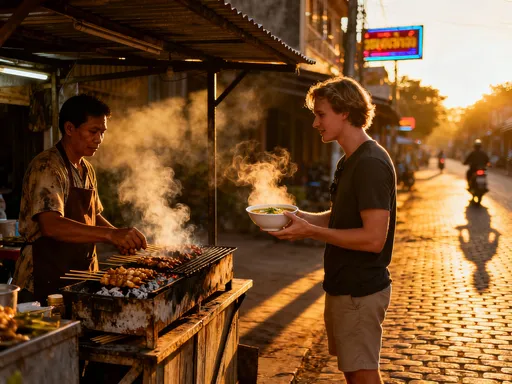
This mindfulness transforms the experience of tourism from consumption to connection. When we rush, we skim the surface. We photograph but do not see. We buy but do not understand. In contrast, moving slowly through Jeju allows the senses to awaken. At a small morning market near Hallim, the scent of grilled mackerel rises with the steam from boiling octopus. A woman in a wide-brimmed hat arranges bundles of wild herbs—deodeok, aster, and mugwort—each tied with twine. There is no signboard, no price list. You point, she nods, and the exchange feels less like a transaction and more like a quiet conversation. This is where shopping ceases to be about acquisition and becomes a form of participation in daily island life.
Jeju’s geography supports this rhythm. The island is compact enough to explore without haste, yet diverse enough to reward lingering. From the highlands of Seongsan to the coastal paths of Hamdeok, each region carries its own character. The absence of overwhelming urban density allows space for stillness. There are no subway stations to race toward, no shopping malls that swallow entire afternoons. Instead, time unfolds in the way a potter shapes clay—gradually, with attention. For women who often carry the weight of household schedules, this release is profound. To walk without purpose, to pause because a cat is napping in a sunlit doorway, to sit on a bench and watch fishermen mend nets—these are small rebellions against the tyranny of efficiency. And they are precisely what make the soul feel lighter.
Jeju’s Unique Cultural Canvas
Jeju’s identity is woven from resilience, nature, and a deep respect for balance. This cultural fabric is not confined to museums or performances—it lives in the markets, the kitchens, the workshops. One of the most enduring symbols of this spirit is the Haenyeo, the female divers who harvest seafood without oxygen tanks. Their tradition, passed down through generations, reflects a relationship with the sea that is both courageous and sustainable. They take only what they need, respecting seasonal cycles and marine life. This ethic of restraint and care extends beyond the water. It shapes the island’s approach to craftsmanship, agriculture, and commerce.
Every object found in Jeju’s local markets carries echoes of this philosophy. Take the ubiquitous volcanic stone, or olle. Carved into walls, statues, and even decorative garden borders, it is both functional and symbolic. Its porous texture tells of fire and time. Artisans use it to make mortars, coasters, and incense holders, each piece shaped by hand and left with a natural finish. There is no attempt to polish away the roughness. Instead, imperfection is celebrated. This aesthetic—known as *wabi-sabi* in broader East Asian tradition—resonates deeply with women who have learned to embrace the marks of time on their own lives. A chipped bowl, a slightly uneven edge, a stain from years of use—these are not flaws. They are proof of a life well-lived.
Sustainability is not a buzzword here; it is a necessity born of isolation. Jeju is an island, and resources are finite. This has fostered a culture of reuse, repair, and thoughtful creation. Textiles are dyed with natural pigments from persimmons, turmeric, and indigo. Herbs are sun-dried and stored in ceramic jars. Even packaging is minimal—paper, cloth, or woven reeds replace plastic. When you buy a bar of soap made from local camellia oil or a hand-sewn pouch filled with dried mugwort, you are not just purchasing a product. You are participating in a system that honors the land and its cycles. This connection between culture and ecology is what makes Jeju’s markets feel so different from the souvenir stalls of more commercial destinations. Here, shopping is not extraction. It is exchange.
Beyond Duty-Free: Redefining Shopping Experiences
The modern tourist is often funneled into a predictable retail journey: arrival at the airport, immediate entry into duty-free zones, followed by visits to branded outlets and chain stores. These spaces are designed for efficiency, not intimacy. Lighting is bright, choices are endless, and the emotional resonance is low. In contrast, Jeju offers a counter-narrative. Shopping here is not about accumulation. It is about discovery. It happens in low-lit studios where potters throw clay on wheels, in garden sheds that double as herbal apothecaries, in open-air stalls where grandmothers sell pickled radish and handmade soybean paste.
One such place, a family-run workshop just outside Jocheon, specializes in *onggi*—traditional Korean fermentation crocks. The owner, a woman in her sixties, explained how each vessel is fired at a precise temperature to allow just the right amount of breathability for kimchi and soy sauce. She does not sell online. There is no Instagram page. You find her because someone told you, or because you wandered down a gravel path and saw the kiln smoking in the distance. This kind of retail is experiential. It requires presence. You watch her hands, rough from decades of work, press the clay into shape. You smell the damp earth. You hear the crackle of the fire. And when you carry home a crock, it is not just a container. It is a vessel of knowledge, of labor, of continuity.
This shift—from buying things to engaging with processes—changes the emotional weight of souvenirs. A mass-produced trinket from a gift shop carries little memory beyond the moment of purchase. But a hand-thrown cup, used every morning for tea, becomes part of your routine. It reminds you of the woman who made it, of the quiet afternoon you spent watching her work, of the way she offered you a cup of barley tea and asked about your family. These objects become anchors of memory. They are not displayed on a shelf and forgotten. They are used, cherished, passed down. In this way, shopping becomes a form of storytelling. Each item carries a voice, a place, a moment suspended in time.
Hidden Markets and Quiet Corners
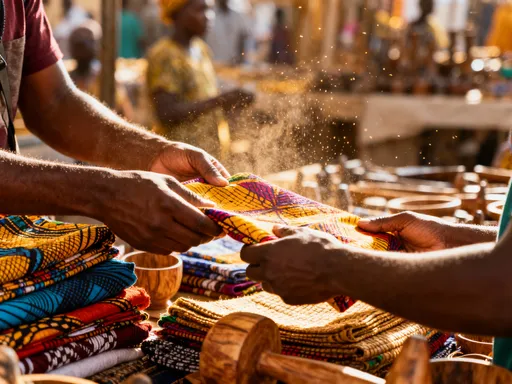
While Jeju’s larger markets draw crowds, the true magic lies in the smaller, lesser-known spaces that operate on the edges of tourism. These are not hidden in the sense of being secret, but in the way they exist outside the usual circuits. A morning farmers’ market in Namwon, open only on weekends, offers baskets of wild mountain greens, honeycombs still dripping with gold, and jars of fermented black garlic. There is no English signage, no QR codes for translation. You learn by pointing, smiling, and miming. A vendor hands you a slice of raw persimmon—sweet, crisp, unfamiliar. You nod, she laughs, and the price is settled with a gesture.
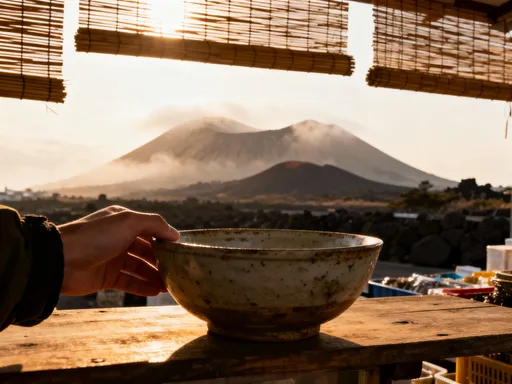
Near Seogwipo, tucked behind a row of citrus orchards, is a ceramics stall run by a retired schoolteacher. Her pieces are not glossy or symmetrical. They are earth-toned, textured, often glazed with ash from the local volcano. She arranges them on wooden shelves under a thatched roof, and when it rains, she covers them with canvas. You can sit on a stool and watch her trim the rim of a bowl with a bamboo tool. She speaks little, but her hands are expressive. When you ask about the patterns, she traces a spiral in the air—”lava flow,” she says simply. There is no pressure to buy. You can stay for an hour or five minutes. This is commerce as contemplation.
Another quiet corner is a textile atelier in Halla-dong, where a mother and daughter team upcycle old hanbok fabric into modern scarves and pouches. The colors—muted indigo, faded red, soft green—are the result of years of wear. They cut the fabric carefully, preserving embroidered motifs of cranes and peonies. Each piece is one-of-a-kind. The daughter explains that they source the garments from estate sales and donations, giving new life to what others have discarded. This act of renewal feels deeply aligned with the values many women hold: care, memory, resourcefulness. To wear one of these scarves is to carry a fragment of someone else’s history, gently repurposed.
The sensory richness of these spaces is unforgettable. At a dried seafood stall, the air is thick with the briny scent of squid and seaweed. Sheets of laver hang like dark tapestries, rustling in the breeze. At a spice vendor’s table, turmeric stains the wood orange, and bundles of perilla leaves release their sharp, anise-like aroma when touched. These are not sterile environments. They are alive. They demand engagement. You cannot scroll through a phone here. You must be present—with your nose, your hands, your curiosity.
Meet the Makers: Stories Behind the Products
One afternoon, I met a woman named Mrs. Park who makes herbal soaps in her home kitchen. She has been using Jeju’s native plants for over thirty years, blending camellia oil, tangerine peel, and pine pollen into bars wrapped in handmade paper. She showed me her garden, where mugwort grows in wild patches and aloe vera thrives in stone planters. “My grandmother taught me this,” she said, stirring a pot of warm oil. “She said the skin remembers what the land gives.” Her soaps are sold at a small cooperative store in the village, not in tourist zones. She does not advertise. Yet her products are sought after by locals who value tradition and purity.
Our conversation lasted nearly an hour. She asked about my children, my home, my skin routine. When I bought a bar of soap, it felt different from any other purchase. It was not impulse. It was intention. I knew the hands that made it, the plants that fed it, the philosophy behind it. This kind of connection transforms the act of buying into something sacred. It is no longer about possession. It is about participation in a lineage of care.
Another encounter was with a potter in Gujwa who specializes in salt-glazed stoneware. He collects seawater from a secluded cove and evaporates it to use in his glaze. The result is a subtle, crystalline texture that mimics the surface of the ocean. He works alone, without assistants, shaping each piece on a kick wheel. “Machines make things faster,” he said, “but the soul is in the slowness.” His studio is open by appointment only, and he limits sales to preserve the integrity of his craft. Buying from him is not convenient. It requires planning, respect, and a willingness to wait. But that very difficulty makes the object more meaningful.
These artisans are not performing for tourists. They are living their lives. When we choose to support them, we are not just buying goods. We are affirming a way of life—one that values patience, skill, and connection to place. For women who have spent years nurturing families and managing households, this recognition of quiet labor feels deeply validating. To honor the unseen work of others is to honor our own.
Practical Tips for the Thoughtful Shopper
For travelers seeking authentic experiences, a few practical strategies can make a meaningful difference. First, learn to recognize locally made goods. Look for signs of handcrafting: slight irregularities in shape, natural variations in color, or materials that reflect the island’s resources—volcanic clay, citrus peels, wild herbs. Avoid items that feel mass-produced or overly polished. If in doubt, ask. Most artisans are happy to explain their process, and a simple “This is made here?” often leads to a rewarding conversation.
Timing matters. Smaller markets are often at their best in the morning, when produce is fresh and vendors are relaxed. Weekdays tend to be less crowded than weekends, allowing for more personal interaction. Some studios and workshops close during the hottest summer months or during seasonal farming periods, so a quick phone call or email in advance can save disappointment.
Bring a reusable bag. Many small vendors do not provide plastic, and carrying your own cloth sack shows respect for Jeju’s eco-conscious culture. Cash is still preferred by many independent sellers, especially in rural areas, so keep small bills handy. And while bargaining is not customary in most local markets, a polite smile and a thank-you in Korean—”gamsahamnida”—go a long way.
Finally, resist the urge to buy everything at once. Let the journey unfold. Return to a stall you liked. Build a relationship. Let your purchases accumulate slowly, each one chosen with care. This is not about filling a suitcase. It is about curating a collection of memories.
Carrying Jeju Home: The Lasting Impact of Intentional Shopping
When I returned home, I placed the items I had collected in spaces where I would see them daily: the handmade cup on my kitchen shelf, the mugwort pouch in my closet, the soap by the bathroom sink. These are not decorations. They are reminders. Each time I use them, I remember the woman who shaped the clay, the daughter who repurposed the fabric, the diver who inspired the resilience I now try to embody.
This is the quiet power of intentional shopping. It turns souvenirs into keepers of story. It transforms objects into vessels of memory and meaning. And it creates a ripple effect far beyond the individual purchase. Every dollar spent at a local workshop supports a family, sustains a tradition, and strengthens the community’s ability to preserve its culture in the face of globalization.
For women who often give so much to others, this kind of travel offers a rare gift: the chance to receive deeply. Not through luxury or extravagance, but through connection, authenticity, and the simple joy of being present. In Jeju, I did not find the perfect souvenir. I found something better—a renewed sense of what it means to live with intention. And that, more than any object, is what I carry home.