Beyond Screen Time: How Family Apps Quietly Strengthened Our Closest Ties
Parenting in the digital age often feels like a balancing act—between connection and distraction, independence and oversight. I once worried tech was pulling my family apart, especially as my teenager grew more absorbed in their phone. But what if the same devices causing distance could actually bring us closer? This is the story of how simple, everyday tools helped me stay connected not only with my child but also with the friendships we both cherish. It wasn’t about more screen time—it was about smarter, gentler use of technology that quietly supported the relationships that matter most.
The Moment I Realized We Were Drifting
It hit me one rainy Tuesday evening. I was standing in the kitchen, chopping vegetables for dinner, and called out to my daughter to set the table. She didn’t answer. I walked down the hall and found her lying on her bed, scrolling through her phone, laughing at something on screen. When I gently asked what was so funny, she shrugged and said, 'Just a meme.' I smiled, but inside, I felt a quiet ache. That moment wasn’t about the missed chore—it was about the missed connection.
For months, I had noticed how our conversations were shrinking. Once, she’d come home bursting with stories about her day—her friend’s silly joke, the drama in math class, the song she couldn’t stop humming. Now, her updates were brief, distracted. Even when we sat together, she was half-present, eyes flicking back to her phone. And when I asked about her friends, she’d say, 'Oh, we text sometimes,' but I could tell something was missing. The depth, the laughter, the little rituals that used to bind them—they were fading.
Then came the school group chat. I didn’t mean to look, but one day, while helping her with a printing issue, I saw it on her screen—a group chat with six of her closest friends from middle school. The last message was from three months ago. A single emoji. No follow-up. No plans. Just silence. My heart sank. These were the girls who used to spend weekends building forts in the backyard, who shared secrets under blankets with flashlights, who promised to be best friends forever. And now? Barely a word.
I didn’t blame the phone. I knew it wasn’t the device itself that was the problem—it was how we were using it. We were surrounded by tools for communication, but we weren’t really communicating. We were liking, scrolling, reacting—but not connecting. That’s when I decided to stop fighting the technology and start using it differently. Not to control, not to spy, but to support. To help rebuild what was slipping away, one small, intentional interaction at a time.
Finding Tools That Fit Real Life, Not Just Tech Trends
At first, I thought the solution was a fancy new app—something with bells and whistles, maybe even AI-powered reminders or mood tracking. I downloaded a few, only to realize they were more confusing than helpful. One asked me to log my daughter’s emotions daily. Another wanted us to do weekly ‘family check-ins’ with a digital questionnaire. They felt forced, clinical, like homework. I wanted connection, not a performance review.
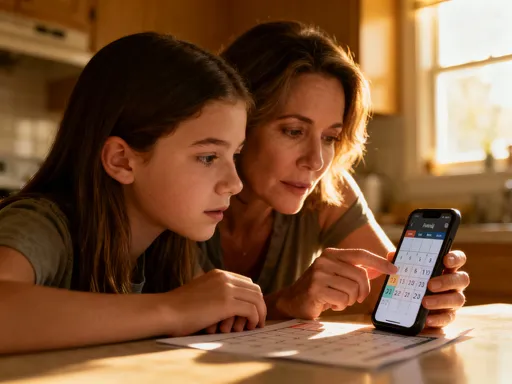
So I stepped back and asked myself: What do we actually need? Not more features. Not more data. Just simple ways to stay in sync—without the stress. That’s when I discovered the power of quiet, unobtrusive tools. The kind that don’t demand attention but quietly make life easier. I started with something basic: a shared family calendar. Not a new app—just the one built into our phones. We added school events, doctor appointments, even grocery runs. At first, my daughter rolled her eyes. 'Mom, I can remember my own stuff.' But then, one morning, she got a notification: 'Dance rehearsal – 4 PM.' She hadn’t forgotten, but she said, 'Thanks, that actually helped.'
That small win made me curious. What else could work this way? I looked into location-sharing—not for surveillance, but for peace of mind. When she started taking the bus to a weekend art class across town, I asked, 'Would it be okay if I could see your location just until you get there? So I’m not worrying the whole time?' She thought about it and said, 'Yeah, as long as it turns off when I get there.' We set it up together, and she even started sharing it with her best friend when they met up. It wasn’t about control. It was about care.
What I learned is that the best tools aren’t the ones that impress—they’re the ones that disappear. They don’t replace conversation; they create space for it. They reduce the friction of daily life so we can focus on what really matters: being present, being kind, being together. And when technology stops feeling like a chore, it stops feeling like a threat. It becomes a quiet ally in the background of our lives, helping us stay connected in ways that feel natural, not forced.
When the School Pickup Became a Connection Point
One of the biggest sources of tension in our house used to be logistics. Who’s picking up whom? Is the soccer game at 3 or 4? Did the schedule change? I’d text my daughter ten times a day, and she’d either ignore me or reply with one-word answers. It wasn’t that she was being difficult—she was just overwhelmed. And I was too. We were both stressed, and it was spilling into our relationship.
Then I discovered a simple carpool coordination app—one that let parents in our school group share schedules, assign rides, and get real-time updates. At first, I thought it was just about convenience. But what happened next surprised me. My daughter started using it too. She’d see who was driving, when, and even add notes like, 'Can we stop for smoothies after?' One day, I noticed she’d messaged a friend: 'My mom’s picking me up—want a ride home?' That small gesture—offering a ride—led to a 45-minute conversation in the backseat, laughter filling the car like it used to. I didn’t even have to try to make it happen. The app created the opportunity.
What I realized was that reducing the mental load of daily tasks freed up emotional space. When we weren’t arguing about who forgot what, we had room to actually talk. My daughter began to see me less as the 'nagging mom' and more as someone who made things easier. And I saw her not just as my child, but as a young person building her own social world. The app didn’t create the friendship—but it helped keep it alive.
There was one moment that stuck with me. It was Friday afternoon, and I was about to leave work when I got a notification: 'Carpool updated—Emma is now riding with us.' I smiled. Emma was one of the girls from that silent group chat. They hadn’t hung out in weeks. That night, my daughter came home in a better mood than I’d seen in months. 'We talked the whole way home,' she said. 'We’re planning a movie night.' The app didn’t plan the movie night—but it made the first step possible. And sometimes, that’s all you need.
Shared Lists, Shared Smiles: The Unexpected Joy of Tiny Collaborations
I never thought a grocery list could make me emotional. But one Sunday evening, as I was adding 'milk' to our shared family list, I noticed a new item below it: 'Popcorn – for movie night?' Followed by a little emoji of a smiling face. It was from my daughter. I laughed out loud. We hadn’t planned a movie night—but now we were. I added 'chocolate' and 'gummy bears,' and she replied with 'YES!!!' That small exchange—just a few words on a digital list—felt like a hug.
What started as a practical tool slowly became a language of its own. Our shared to-do list wasn’t just for chores anymore. It was where we left little notes, silly challenges, and quiet acknowledgments. I’d add 'Laundry – you’re on duty!' and she’d respond with 'Only if you make pancakes tomorrow.' I did. And she did the laundry. These weren’t grand gestures—they were tiny collaborations, but they built something bigger: a sense of teamwork, of us being on the same side.
During a particularly busy week, when I was traveling for work, I left a note on the list: 'Miss you. Hope your science project went well.' She replied: 'It did! Got an A. Miss you too.' That simple exchange kept me grounded. It reminded me that even when we were apart, we were still connected. And when I came home, she had added 'Welcome back!' to the list, along with 'Favorite snacks in the fridge.'
These small digital moments didn’t replace face-to-face time—but they kept the thread alive between us. They were low-pressure, no-stakes ways to stay in touch. No need for a long conversation, no pressure to perform. Just a quick check-in, a shared joke, a reminder that we were thinking of each other. And over time, those little sparks added up to something warm and steady—a quiet rhythm of care that ran beneath the surface of our busy lives.
Keeping Friendships Alive Beyond the School Gates
When we moved to a new neighborhood last year, I worried about how it would affect my daughter’s friendships. She left behind not just a school, but a whole world of shared memories. I hoped the bonds would last, but I knew from my own childhood how easily friendships can fade when life pulls people in different directions.
At first, the calls and texts slowed down. Then, one day, she mentioned offhand, 'I forgot Maya’s birthday. I feel so bad.' I saw the guilt in her eyes. These girls had been inseparable. Now, they were just trying to stay in touch across miles and busy schedules. That’s when I introduced her to a simple event reminder app—one that lets you save important dates and get gentle nudges ahead of time. I showed her how to add her friends’ birthdays, and she added a few, half-heartedly. But then, two weeks later, she got a notification: 'Lila’s birthday – in 2 days.'
The next thing I knew, she was on her laptop, designing a digital card. She sent it with a voice message: 'Happy birthday! I miss you so much!' Lila responded within minutes: 'You have no idea how much this meant to me.' They ended up video chatting for an hour that night. After that, my daughter started using the reminders more. She sent small gifts, made surprise calls, even organized a group Zoom game night. The app didn’t create the care—but it helped her express it.
What I love is how these tools don’t force connection—they support it. They don’t replace the effort of maintaining a friendship, but they remove some of the friction. A simple reminder becomes a moment of thoughtfulness. A quick message becomes a bridge. And over time, those bridges become pathways back to each other. I’ve seen my daughter grow not just in confidence, but in empathy. She’s learning that friendship isn’t just about being together—it’s about showing up, even when it’s hard. And sometimes, a little nudge from technology is all it takes to make that happen.
Tech as the Background Helper, Not the Centerpiece
One of the things I’ve learned is that the most powerful tools are the ones you don’t notice. They don’t buzz with constant notifications. They don’t demand likes or shares. They don’t track your every move or try to keep you scrolling. Instead, they work quietly, like a well-timed whisper, helping without interrupting.
That’s the difference between the apps we use and the platforms that use us. Social media often feels like a performance—curated photos, polished updates, endless comparison. It’s exhausting. But the tools I’ve come to rely on—shared calendars, reminder apps, coordination platforms—don’t ask for anything. They don’t need me to be interesting, popular, or perfect. They just help me be present, organized, and kind.
My daughter has noticed the difference too. She told me recently, 'I feel less stressed about my phone now.' I asked why. She said, 'Because I’m not always checking it to remember stuff. And when I do use it, it’s to actually talk to someone, not just scroll.' That hit me. We’ve both experienced digital fatigue—the mental clutter, the anxiety, the feeling of being always on but never really connected. But by choosing tools that support rather than distract, we’ve reclaimed some peace.
These apps don’t replace real conversation. But they create the conditions for it. When we’re not arguing about forgotten rides or missed birthdays, we have room for deeper talks. When the logistics are handled, we can focus on the laughter, the hugs, the quiet moments. Technology, when used with intention, doesn’t pull us apart—it helps us come together, gently, without fanfare.
What We Gained When Tech Stepped Back
Looking back, I realize we didn’t just find better tools—we rebuilt trust. My daughter knows I’m not watching her every move. She knows I respect her privacy. And in return, she’s more open with me. She shares more, asks for help more, even initiates conversations. We argue less. We laugh more. Our home feels calmer, warmer, more connected.
The biggest change? We listen better. Not because we’re trying harder, but because there’s less noise. The mental clutter of forgotten plans, missed messages, and logistical chaos has faded. And in its place, we’ve found space—for stories, for silence, for being together without having to say anything at all.
I used to worry that technology was stealing my child from me. Now, I see that it was never the enemy. It was how we were using it. When we shifted from passive scrolling to active support, everything changed. The devices that once felt like barriers became bridges. The apps that once seemed cold became quiet companions in our daily lives.
The truth is, the best technology doesn’t dazzle. It disappears. It doesn’t demand attention—it gives space. And in that space, relationships grow. Not because of the tools, but because of what they make possible: more time, less stress, and the quiet certainty that someone is thinking of you, even when you’re apart. That’s the kind of connection I wanted. And now, we have it—not in spite of technology, but because of how we chose to use it.